

The Art of Vertical Urbanism & Placemaking
A Closer Look at Land and Infrastructure Efficiency
At the recent National Association of Real Estate Editors (NAREE) conference in Miami, the conversation centered on a pressing challenge facing Sun Belt markets: the growing demand for vertically dense, mixed-use development.
While high-rises are often discussed in terms of how they alter a city’s skyline, the true driver behind vertical urbanism is far more practical. It is a functional response to infrastructure capacity, land efficiency, and a permanent shift toward walkable urban living.
Speaking on a panel dedicated to these trends, our Founding Senior Principal, Scott Ziegler, shared key insights from his 25 years of studying urban density. To understand where our cities are heading, Scott suggests focusing on the objective math and engineering that make high-density spaces work.
The Core Math: 1 Acre vs. 70 Acres
The environmental and financial arguments for building vertically come down to a stark comparison of land use.
“These buildings are incredibly friendly to our environment compared to urban sprawl,” Scott noted during the panel.
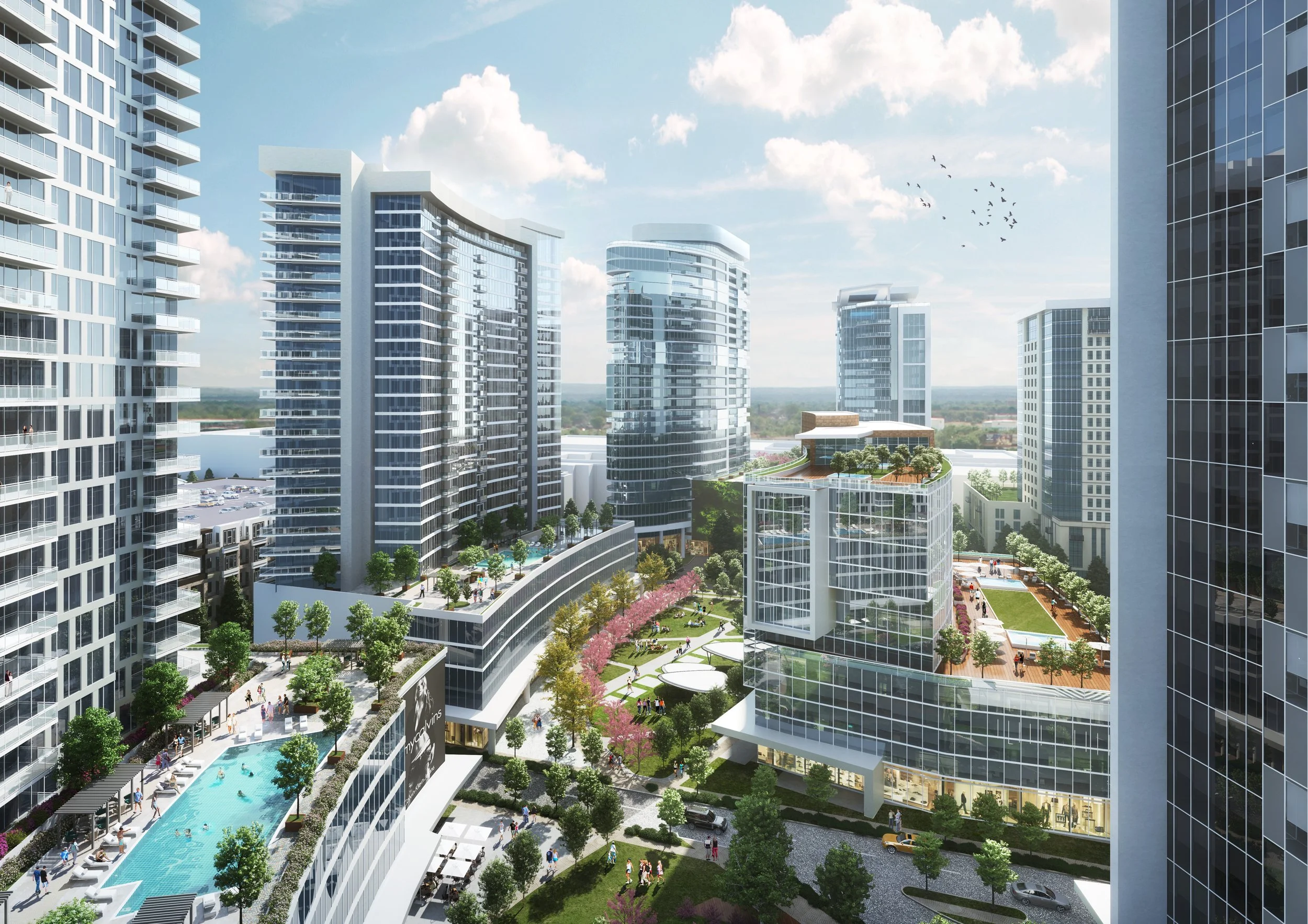
Consider the footprint required to house a growing population. A 200-unit condominium project can be successfully integrated onto a single acre of land in an urban core. To accommodate that exact same community of 200 residential units in a traditional horizontal, suburban layout requires roughly 70 acres of land.
This footprint divergence represents a massive difference in municipal investment:
Horizontal sprawl forces cities to finance, build, and maintain miles of new roads, extended utility runs, and sewer infrastructure.
Conversely, a vertical footprint consolidates that demand onto a single, highly efficient node, drastically reducing the infrastructure strain on municipal resources.
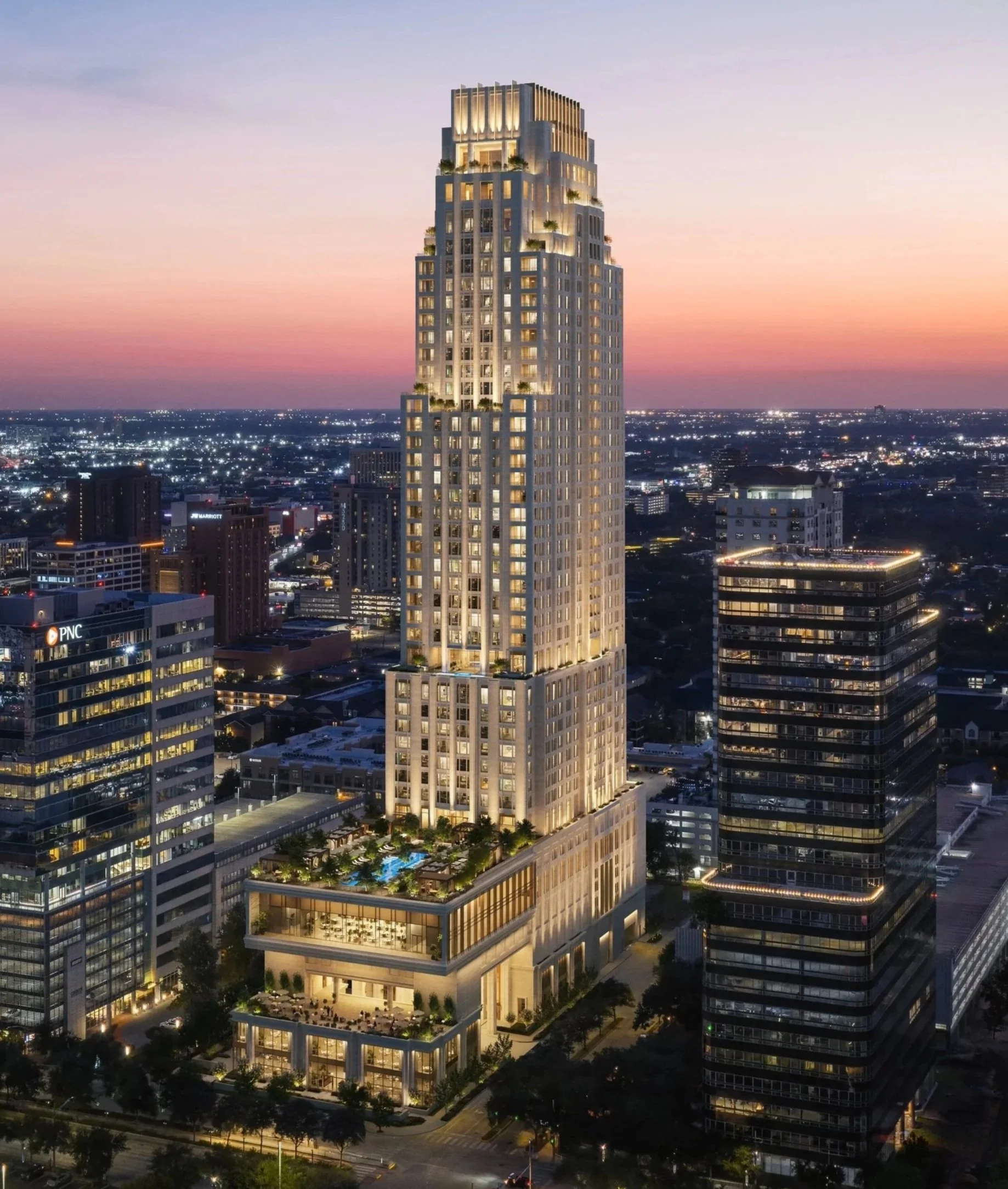
Ritz Carlton Hotel & Residences in Houston, Tx Ziegler Cooper Architects Visuals: The Boundary
Navigating the Challenges of Mixed-Use Stacking
While the land efficiency of a vertical tower is clear, achieving that density requires solving intricate physical design puzzles behind the scenes.
“Vertical mixed-use projects are extraordinarily complicated,” Scott explained. “From an architectural perspective, stacking presents its own challenges. The column grids that work for parking garages don't work well for condos.”
Achieving this requires complex structural gymnastics and transfer beams to make distinct architectural programs align seamlessly over a single footprint.
A prime example of this coordination is The Ritz-Carlton Hotel & Residences in Houston. The 45-story tower gracefully stacks 156 hotel rooms, 112 private residences, ground-floor retail, and multi-level parking into a unified, high-performance structure.
Resolving these transitions seamlessly is what allows the building to function effortlessly for its residents, guests, and the surrounding neighborhood.
Solving Multiple Problems with Smart Incentives
The benefits of vertical development extend beyond the building envelope and into the broader socioeconomics of the community. Municipalities are increasingly recognizing that density can be leveraged as a tool to solve multiple urban planning challenges at once.
Scott pointed to progressive municipal frameworks in cities like Denver and Austin as successful blueprints. Both cities have implemented programs that allow exceptions for taller buildings and increased density in direct exchange for the developer providing affordable housing units within the core.
By utilizing smart zoning incentives, cities can successfully integrate attainable housing into highly desirable urban centers, ensuring that the urban core remains diverse, accessible, and vibrant.
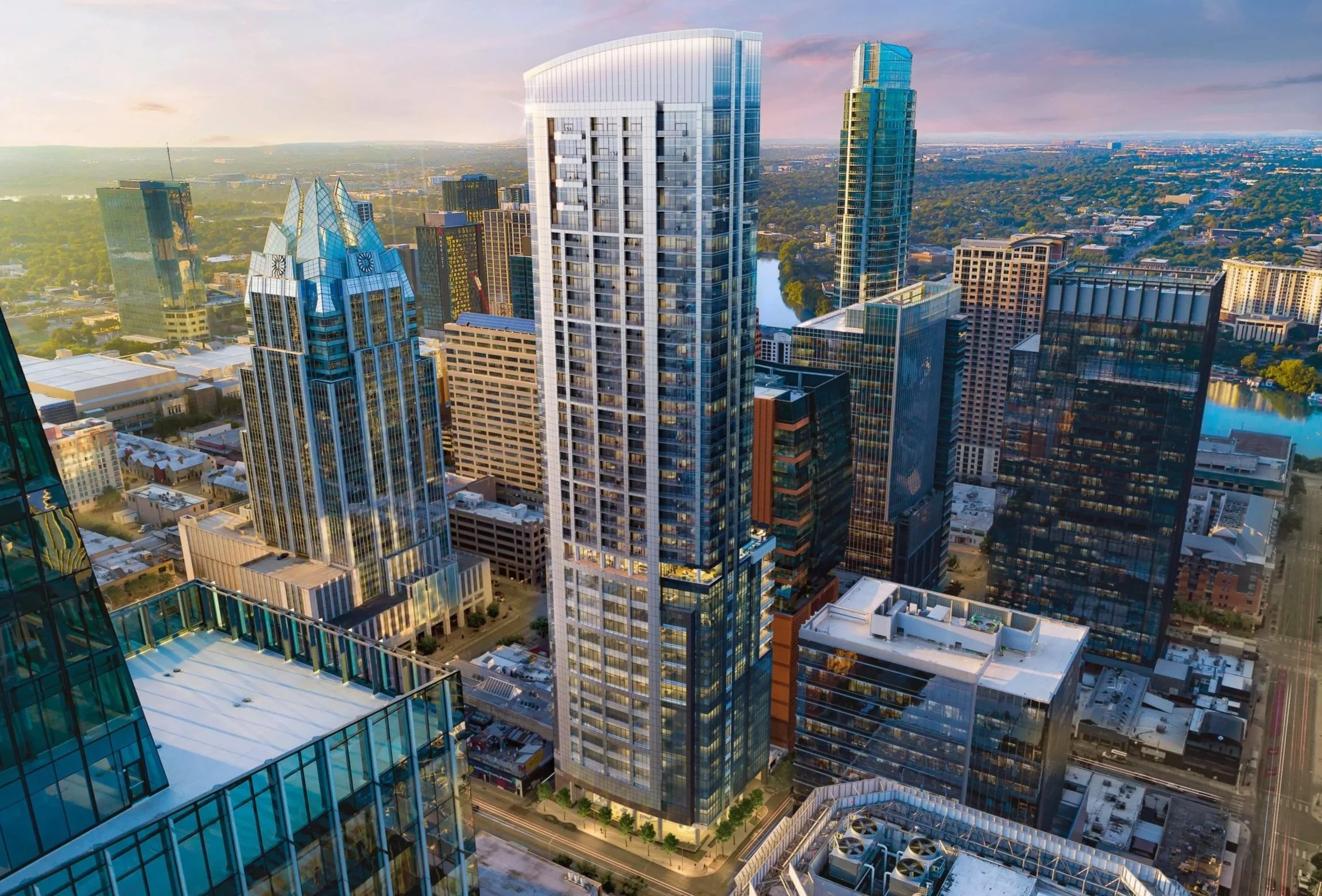
415 Colorado in Austin, Tx Ziegler Cooper Architects
Designing for the Next Era
Whether analyzing the crisp, high-density workplace environment of Stonelake's 5th & Colorado in Austin or the residential scale of The Ritz-Carlton Hotel & Residences in Houston, our approach at Ziegler Cooper Architects remains grounded in objective data and structural precision.
Building vertically isn't about chasing height for its own sake. It is a deliberate choice to maximize land intelligence, relieve pressure on municipal infrastructure, and create a balanced, sustainable urban fabric where architecture directly improves the day-to-day human experience.