

The First Ten Minutes: How Your Parking Lot Can Drive Guests Away
The First Ten Minutes: How Your Parking Lot Can Drive Guests Away
Arrival sequence shapes welcome, confidence, and stewardship — this guide is guide for executive pastors and building committees to evaluate the strength of their welcome experience.

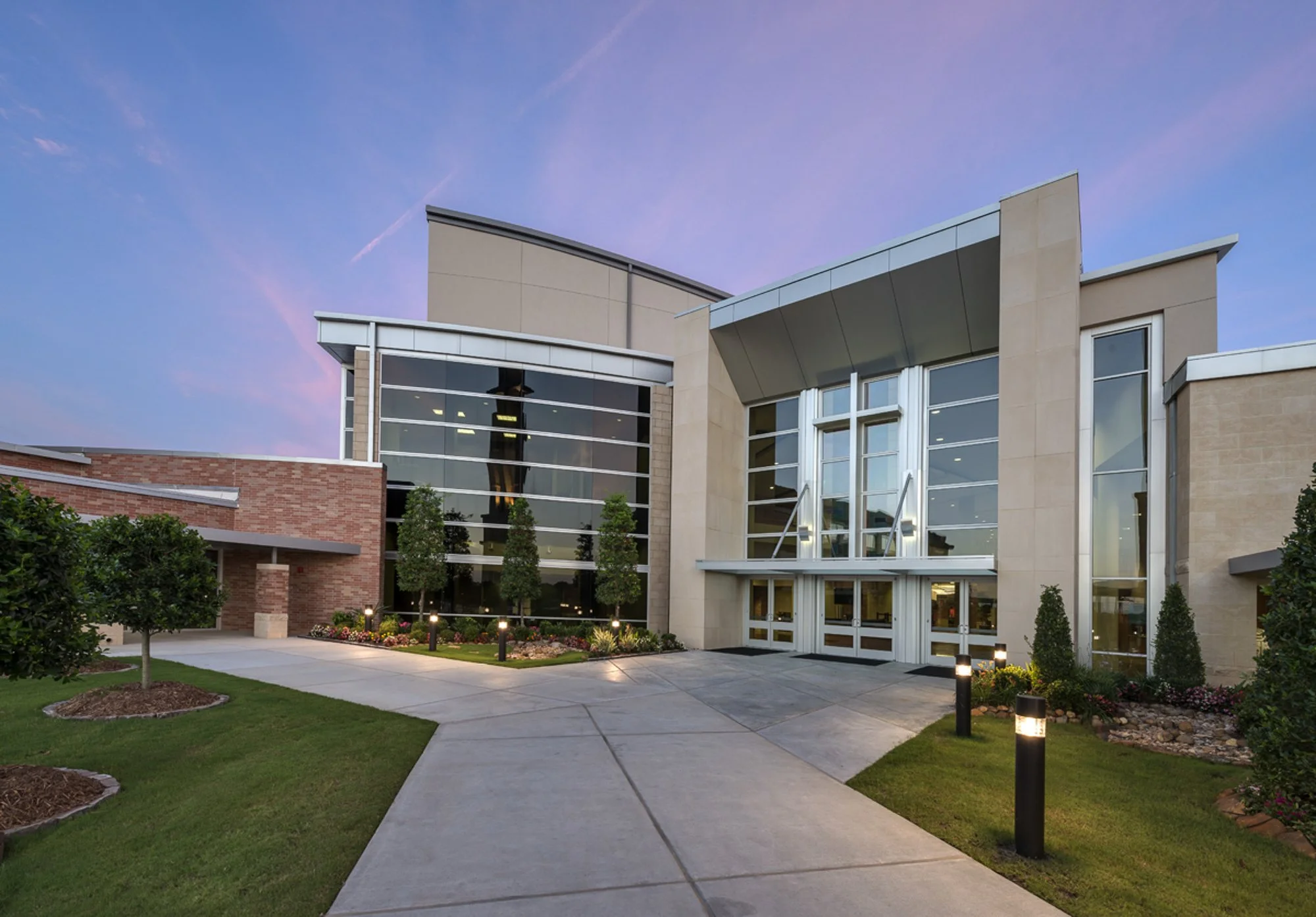
The Churches That Feel Like Home
Before committing to a larger building program, churches should walk their own arrival sequence the way a first-time guest experiences it. In our experience, some of the highest-return hospitality investments on a church campus happen before anyone reaches the front door — and they are usually a fraction of the cost of new square footage.
A church that feels like home starts before the front door. It starts when a family turns into the parking lot, looks for a place to park, steps out of the car, and tries to understand where to go next.
That matters. Because before a guest hears the sermon, sings the first song, or meets a greeter, they are already experiencing whether the church feels clear, cared for, and ready to receive them. In Southeast Texas — where heat, rain, traffic, and the scale of the site all shape the first impression — hospitality begins outside.
The Real Question
Hospitality starts before the handshake.
Too often, churches think carefully about the lobby, worship room, children's space, and coffee area, but treat the parking lot as leftover infrastructure. It becomes the space people have to survive before the church experience actually begins.
The research says otherwise. Charles Arn and Gary McIntosh — the same team whose retention findings anchor the first paper in this series — call it the ten-minute rule: a guest's first impression largely determines whether they return, and it is formed within roughly the first ten minutes of the visit, before the first song or sermon.1 Much of that window is spent outside the building: turning in, parking, walking, finding the door.
And the stakes of that window are steep. McIntosh's research on guest assimilation found that in growing churches only about 16 percent of first-time guests return for a second visit — but roughly 85 percent of second-time guests come back for a third.2 In other words, the entire first visit has one job: earning the second. An arrival sequence that creates confusion spends that one chance before the service begins.
For a first-time guest, the parking lot is not leftover space. It is the beginning of the visit. Guests are asking practical questions before they are asking spiritual ones. Where do I turn in? Where do I park? Which door do I use? Where do I take my children? Am I going to look foolish if I go the wrong way?
A confusing arrival sequence creates quiet friction. It can make a guest feel late, exposed, uncertain, or out of place before they ever reach the building. The goal is not just efficient circulation. The goal is confidence.
Five planning principles follow. Each ends with the practical question it raises for your congregation's next facility decision.
Design Arrival as a Sequence, Not a Moment
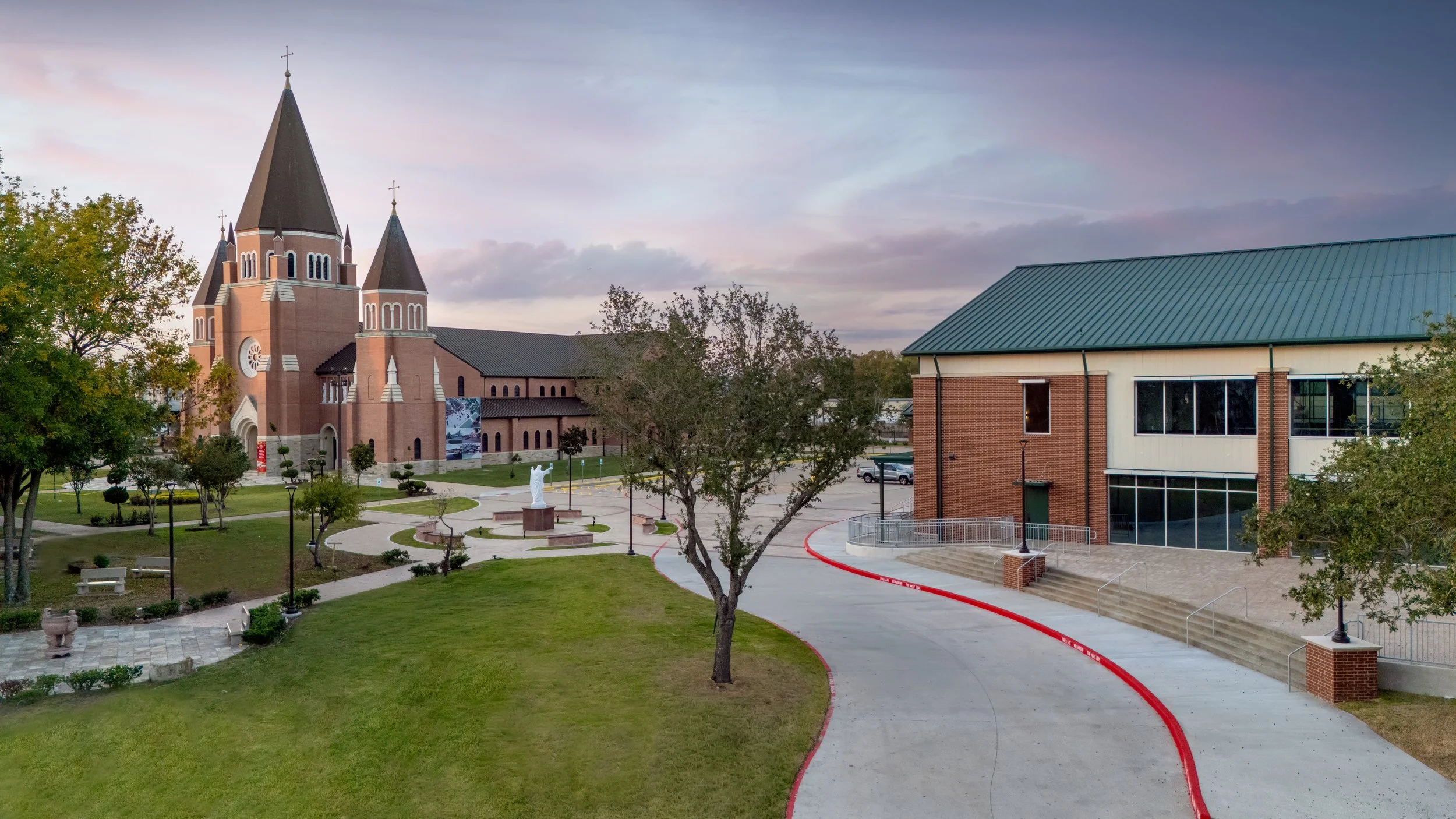
Arrival is not one thing. It is a chain of experiences: street presence, driveway, parking, walking route, drop-off, front door, lobby, children's check-in, and finally the worship room. Each step either builds confidence or adds friction.
A beautiful lobby cannot fully recover from a confusing parking lot. A warm greeter cannot fully compensate for an unclear front door. A strong children's ministry can still feel stressful if the family path is hard to understand. The whole sequence matters because people experience it as one continuous welcome.
The right planning question is not only, “Where is the entrance?” The better question is, “What does a guest feel at each step?” Do they feel expected? Do they feel safe? Do they know where to go? Do they understand where their children belong? Do they feel like the church has made room for them before they ever walk inside?
What this means for your decision: Budgets treat paving, signage, canopies, and doors as separate line items. Guests experience them as one continuous welcome. Evaluate and fund the arrival sequence as one project, not five — piecemeal fixes rarely repair a broken sequence.
Design for the Guest Who Does Not Know the Shortcuts
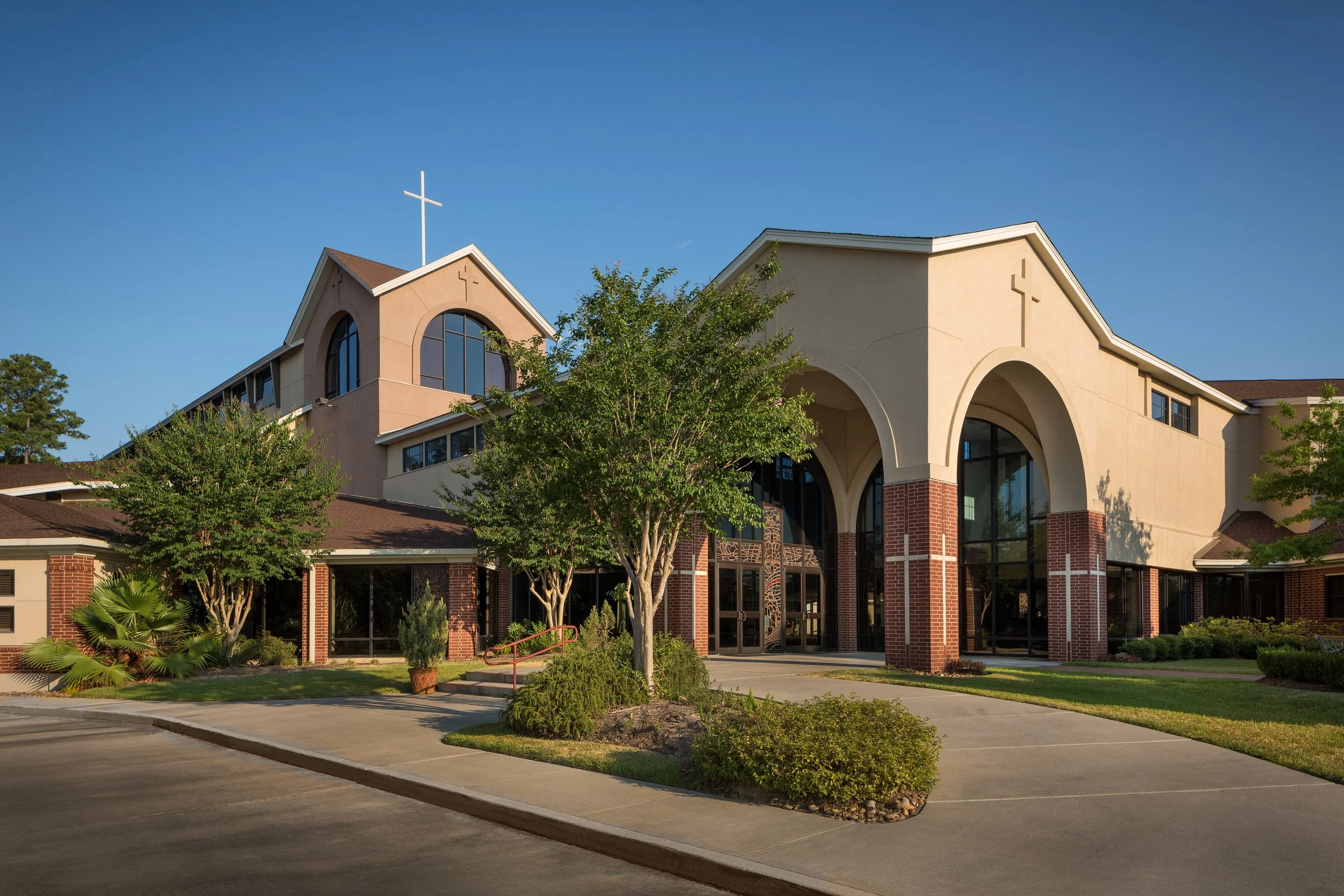
Longtime members experience the campus by memory. They know which driveway to use, which door is closest, where the shaded spaces are, and how to get to children's ministry without thinking about it. Guests do not have that luxury. They experience the campus literally, one decision at a time.
Churches consistently overestimate how readable their campus is. When Faith Perceptions sends mystery guests to ask directions at businesses near a church, congregations are often surprised to learn how few neighbors can point the way — a reminder that familiarity hides what a newcomer actually sees.3 The same blindness applies inside the property line: parking that members navigate by habit can be genuinely confusing to someone reading it for the first time.
Guest parking deserves particular honesty. Church researcher Thom Rainer notes that a parking lot at 80 percent capacity appears completely full to a guest, and that unmarked or hidden guest parking quietly tells visitors they were not expected.4 Visibility is the point: guest parking should be findable before someone needs it, not after they have circled the lot.
That is why the arrival path should be readable from the car. The driveway, guest parking, drop-off, front door, lobby, and children's check-in path should begin to make sense before someone has to ask for help. A guest should not need insider knowledge to arrive with confidence.
Good wayfinding starts with architecture, not signs. Signs are important, but they should confirm what the campus is already communicating. If the building, walks, canopies, lighting, landscaping, and parking layout are all sending different messages, signs have to work too hard. The clearest campuses do not just tell people where to go. They quietly show them.
What this means for your decision: Ask someone unfamiliar with your campus to find children's check-in from the street without help, and follow them. Every place they hesitate is a candidate for your capital priority list — and most hesitations are solved with siting, canopies, and paint before they require buildings.
Make the Front Door Unmistakable
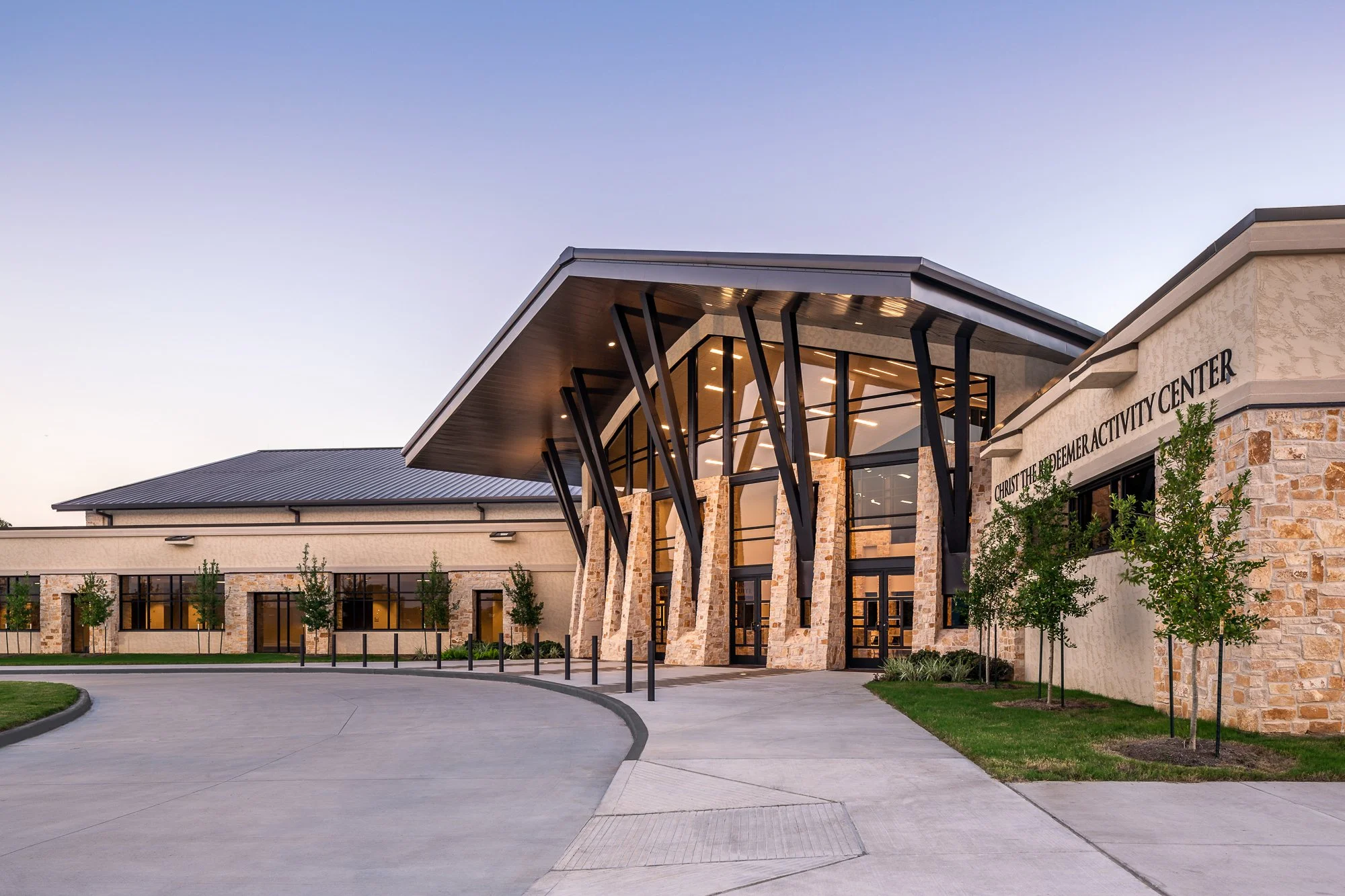
Many church campuses have several doors. Not every door should feel equal. If every entrance looks like a possible front door, guests may hesitate, wander, or follow someone else and hope for the best.
The main entry needs hierarchy. It should be supported by the architecture of the campus: a canopy, a clear walk, appropriate scale, lighting, transparency, signage, landscape, and alignment with parking and drop-off. The front door should feel like the natural conclusion of the arrival sequence.
This does not mean the church needs to feel formal or overly grand. Contemporary churches often value warmth, casualness, and accessibility, and those are good instincts. But casual should not mean ambiguous. A front door can feel warm and still be obvious. It can feel approachable and still have enough presence to say, “This is where you are meant to enter.”
What this means for your decision: Stand at your farthest guest parking space and ask whether the front door announces itself from there. If it does not, a canopy, a widened walk, and entry lighting often solve what a committee assumed required a lobby expansion — at a fraction of the cost.
Treat Drop-Off as Hospitality, Not Traffic
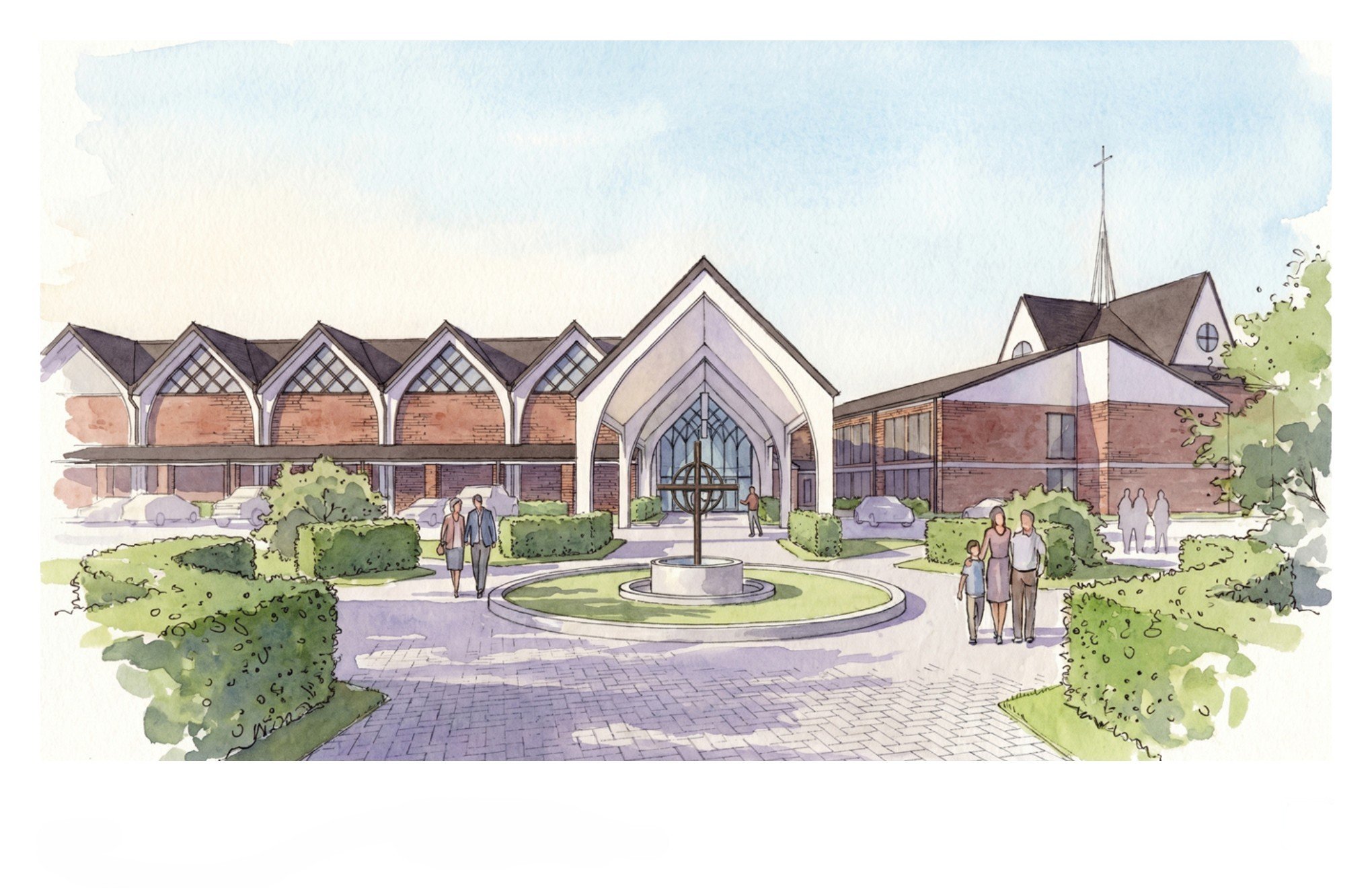
Drop-off is one of the most practical places where a church can care for people. It serves parents unloading children, seniors walking slowly, guests arriving in bad weather, people with limited mobility, volunteers carrying materials, and families trying to arrive together without stress.
In Southeast Texas, shade and rain protection are not luxuries. They are part of hospitality. A covered drop-off, shaded walk, protected entry, or well-placed canopy can change the emotional tone of arrival. It tells people the church has thought about the realities of their life before they even step inside.
A good drop-off should connect naturally to the lobby and children's ministry without creating conflict between cars, pedestrians, and children. It should feel safe, visible, and easy to understand. The goal is not to make the campus feel institutional or over-controlled. The goal is to make the most vulnerable moments of arrival feel calm and cared for.
What this means for your decision: When value engineering begins, the covered drop-off is often the first proposed cut. Before trading it for interior finishes, ask who uses it — seniors, young families, guests in the rain — and what it says about the church when it is gone.
Keep Cars, Children, and People from Fighting Each Other
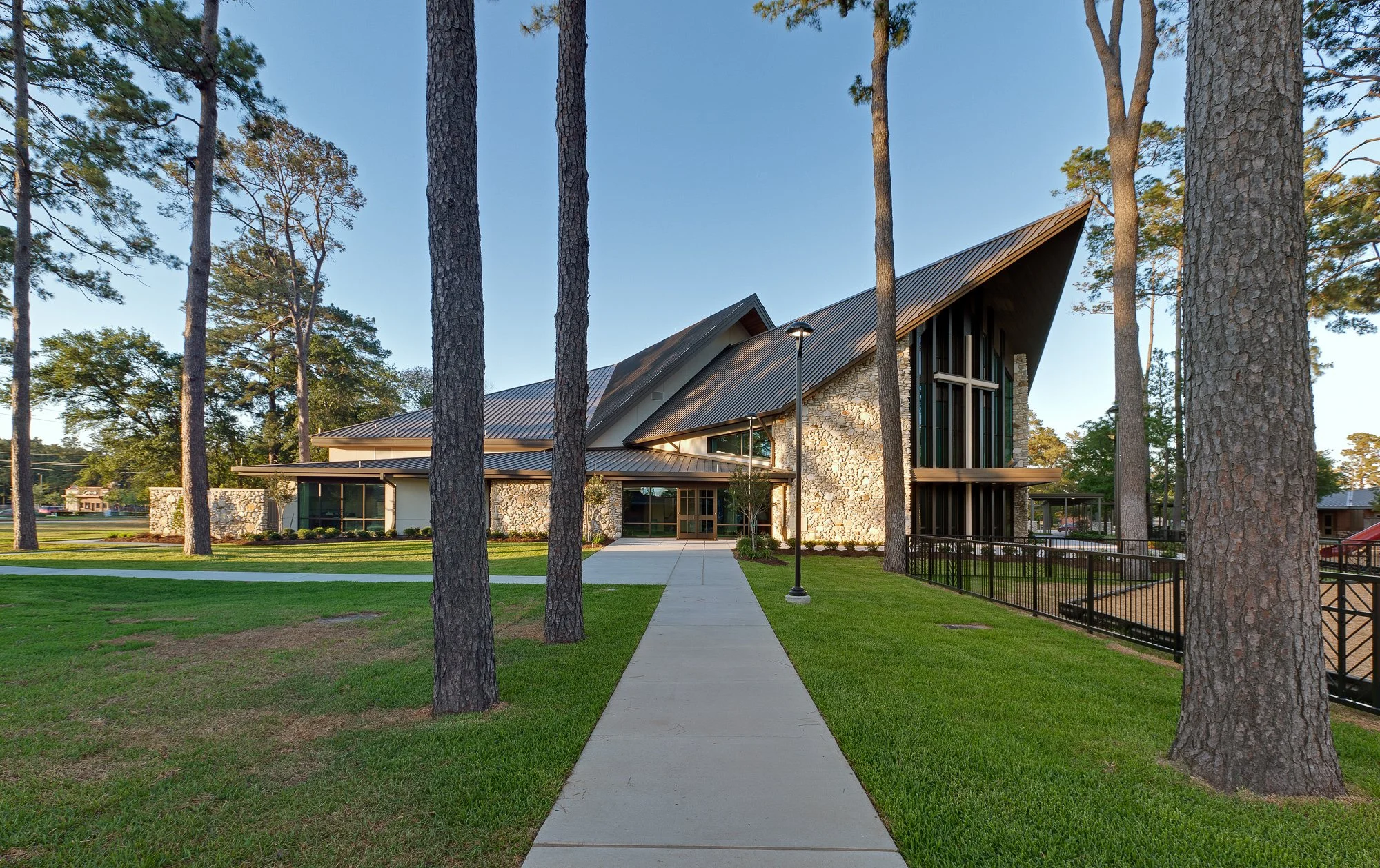
Arrival often breaks down when too many different movements are forced into the same space. First-time guests are searching. Parents are unloading children. Seniors are walking carefully. Volunteers are crossing with supplies. Members are cutting through the shortest path. Cars are stacking at drop-off. Everyone is trying to do the right thing, but the campus is making them negotiate too much.
Good planning separates movements that create stress. Cars, pedestrians, children, service vehicles, emergency access, buses, and drop-off traffic all need to be understood early. This does not mean the campus has to become complicated. It means the obvious path should also be the safest path.
The best church campuses feel relaxed because stressful decisions have been designed out. Parents should not have to wonder whether their child is crossing active traffic. Seniors should not have to choose between the shortest path and the safest one. Guests should not have to decode the campus while cars are moving around them. A church that feels like home makes the next step feel clear.
What this means for your decision: Ask your architect to draw the Sunday 10:40 a.m. condition — cars stacking at drop-off, children crossing, seniors walking, guests searching — not just the empty site plan. Conflicts are inexpensive to fix on paper and expensive to fix in concrete.
A practical check
Six Questions to Ask About Your Arrival Experience
Where does a guest first understand, “This is the way in”?
Can a first-time guest identify the main entrance from the parking lot?
Is guest parking visible before someone needs it?
Can a parent unload children without crossing active traffic?
Is there shade or rain protection at the primary arrival point?
What one site improvement would most improve confidence before someone enters the building?
Closing Thought
A church that feels like home does not begin at the lobby. It begins at the edge of the campus.
It begins where people turn in, park, step out, gather their children, look for the door, and decide whether they feel confident enough to keep moving forward. These are practical moments, but they are not small moments. They are the first layers of welcome.
The foundation is thoughtful planning. Clear drives. Obvious entries. Protected drop-off. Safe pedestrian paths. Guest-centered wayfinding. Shade, light, and weather protection that fit the realities of Southeast Texas. A campus that helps people arrive calmly is already doing the work of hospitality.
Good stewardship starts at the property line. Often, the path to a more welcoming church begins before anyone reaches the front door — and costs far less than the building committee expects.
Notes
- Charles Arn and Gary L. McIntosh, “The Ten Minute Rule,” Leading Ideas, Lewis Center for Church Leadership. Interviews with first-time church visitors found that first impressions — led by the friendliness of the people — largely determine whether guests return, and that those impressions form within roughly the first ten minutes of a visit. Source ↗
- Gary L. McIntosh, Beyond the First Visit (Baker Books). Among growing churches, roughly 16 percent of first-time guests return for a second visit, while about 85 percent of second-time guests return for a third and subsequent visits. Summary ↗
- Faith Perceptions with Lifeway Research, “The 4 Biggest Blind Spots of Churches.” As part of its Mystery Guest Program, Faith Perceptions sends visitors to ask directions at businesses near a church; congregations routinely overestimate how well-known and easy to find they are. Source ↗
- Thom S. Rainer, “The Ten Commandments of Church Parking Lots,” Church Answers. A parking lot at 80 percent capacity appears completely full to a guest; unmarked guest parking signals that guests are not expected. Source ↗